
Every buyer sees their own price
Dingli sells chains to Northwind in the US and to Velostrada in Germany at different prices and terms — that is normal. Patisco makes it a core capability: list once, every buyer gets their own catalog and prices, and orders right there.
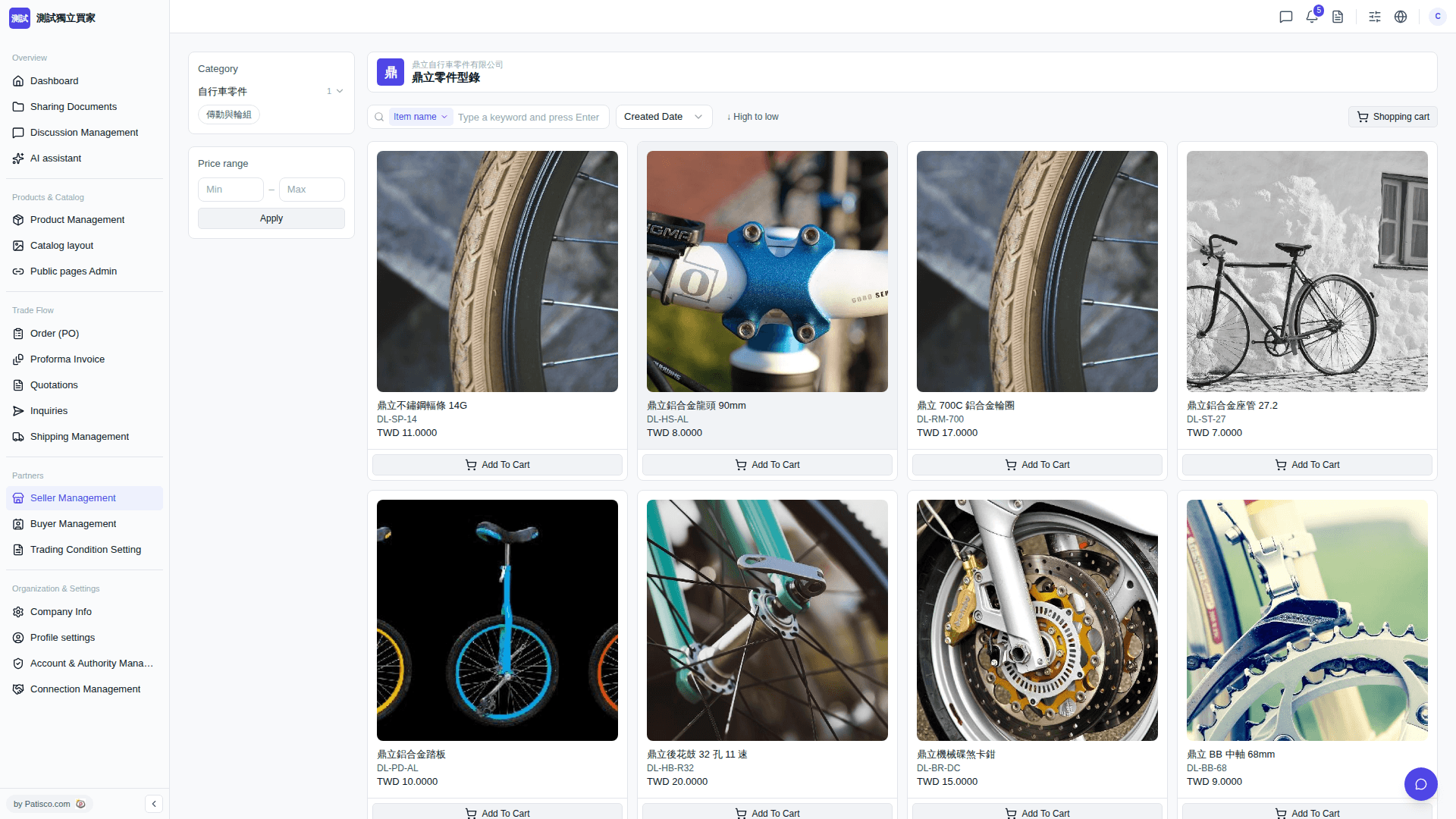
- 1Only the catalog Dingli gives Northwind
- 2Categories arranged by Dingli
- 3Northwind’s price, not a public list price
Monday morning, Dana asks “this year’s price?”
Dana, Northwind’s buyer, emails Jer: “chain prices for this year?” He used to open three spreadsheets, find last year’s terms, check which file was current, then type a reply. Now: “it’s in your catalog.” Dana looks, orders, and Dingli has QT-2026-0411.
List once, one page per buyer
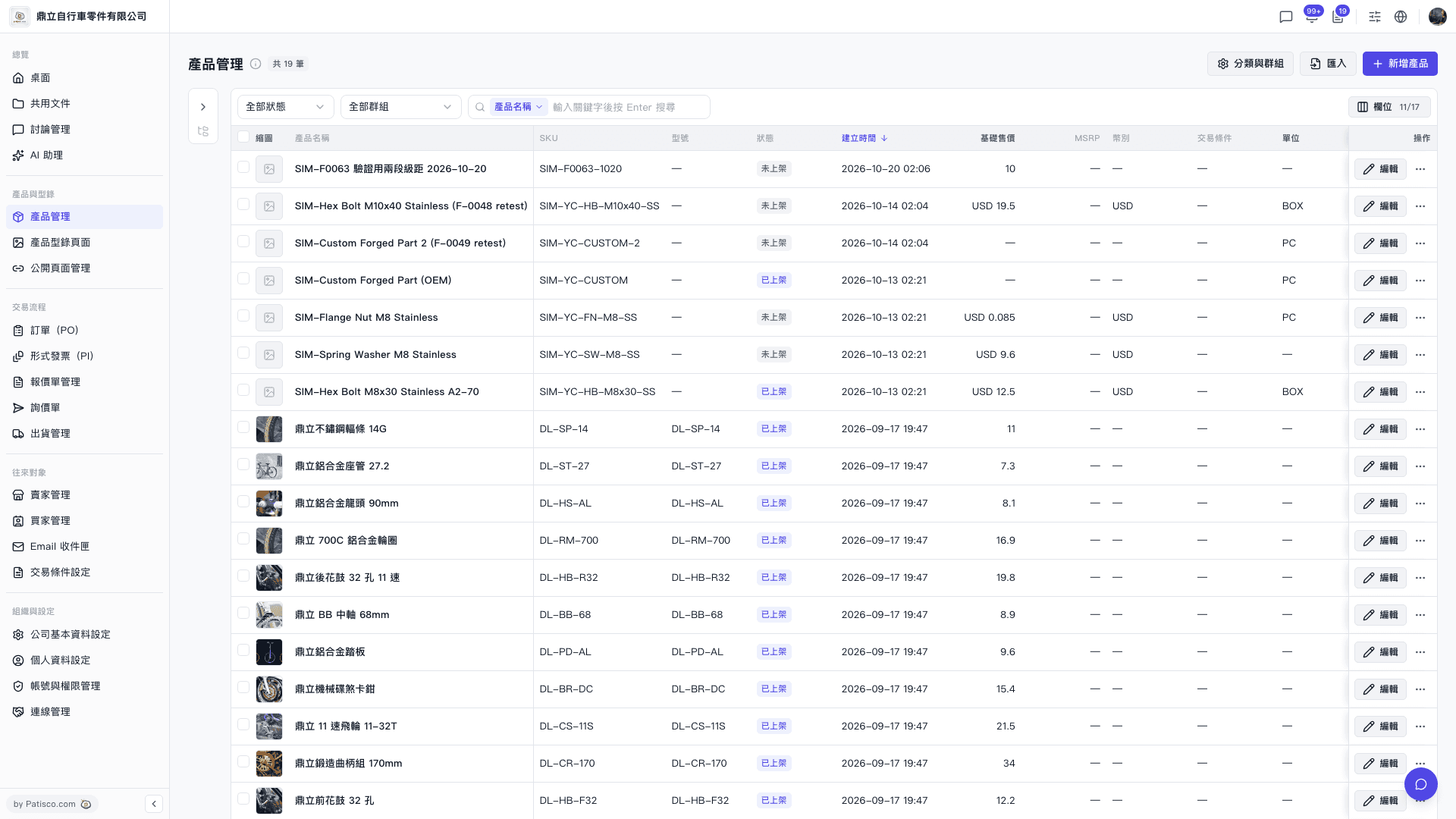
- 1One photo per item, used directly in catalogs
- 2SKU is Dingli’s own code; buyer part numbers map separately
- 3Only published items appear in buyer catalogs
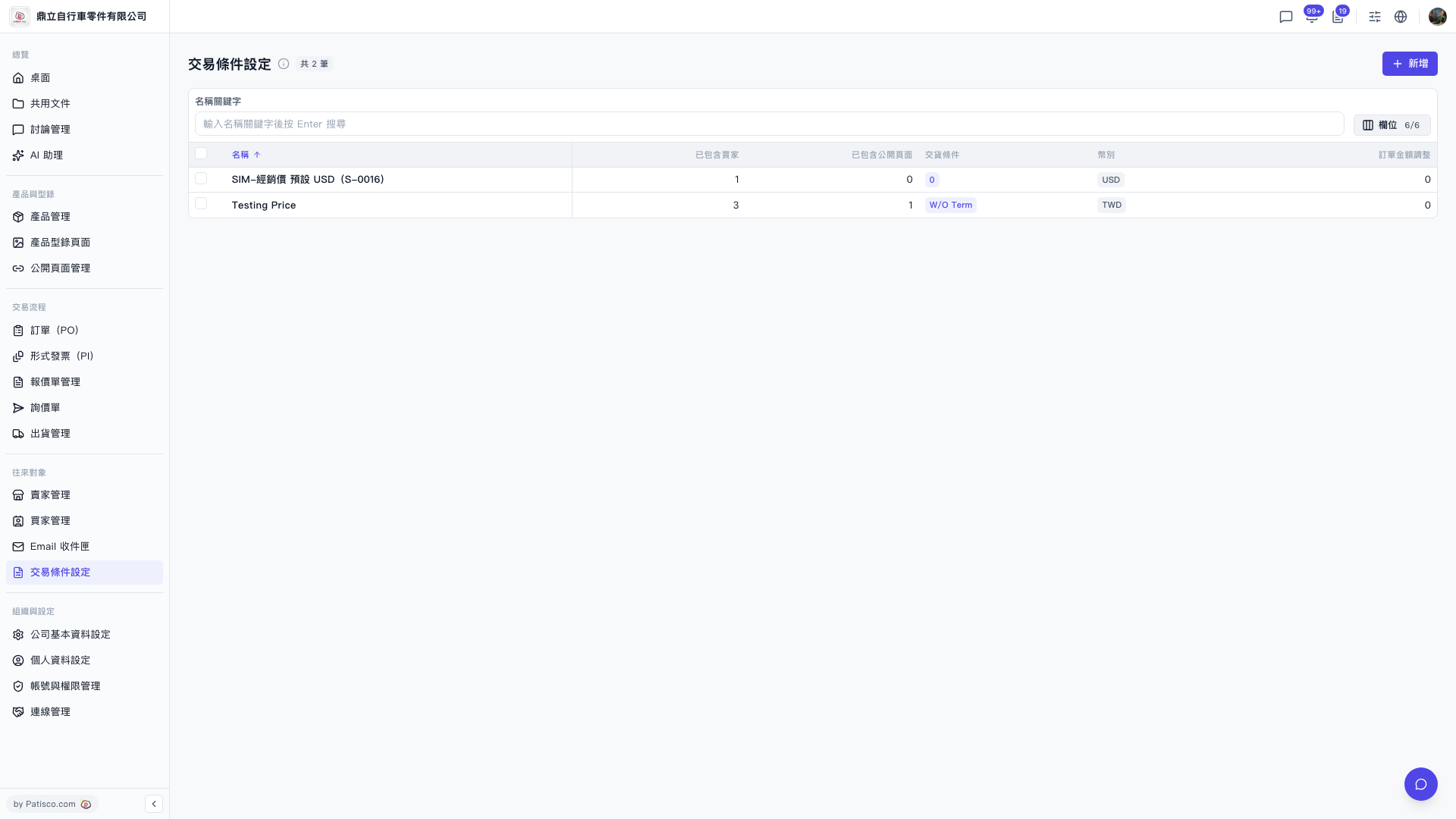
- 1Only the catalog Dingli gives Northwind
- 2Categories arranged by Dingli
- 3Northwind’s price; add to cart and it becomes a quotation
- 1One photo per item, used directly in catalogs
- 2SKU is Dingli’s own code; buyer part numbers map separately
- 3Only published items appear in buyer catalogs
Differentiation by system, not by memory.
Pricing strategy becomes a company asset
Which buyer gets which price, and why, is on the company’s books. Jer leaves; his successor quotes correctly on day one.
Each buyer only enters their own page; Velostrada never sees Northwind’s price, and there is no attachment to misaddress.
Browsing, ordering and change requests happen on the page. One email less for you, one day less waiting for them.
ThenThe second Dana confirms, QT-2026-0411 becomes Dingli’s PO to Hongtai and the PI to Northwind. One deal, one chain →
Walk through it with your own quotation
Bring a recent quote; in 20 minutes we demo with it.
Talk to us for 20 min →20-minute online meeting · pick a slot on the calendar